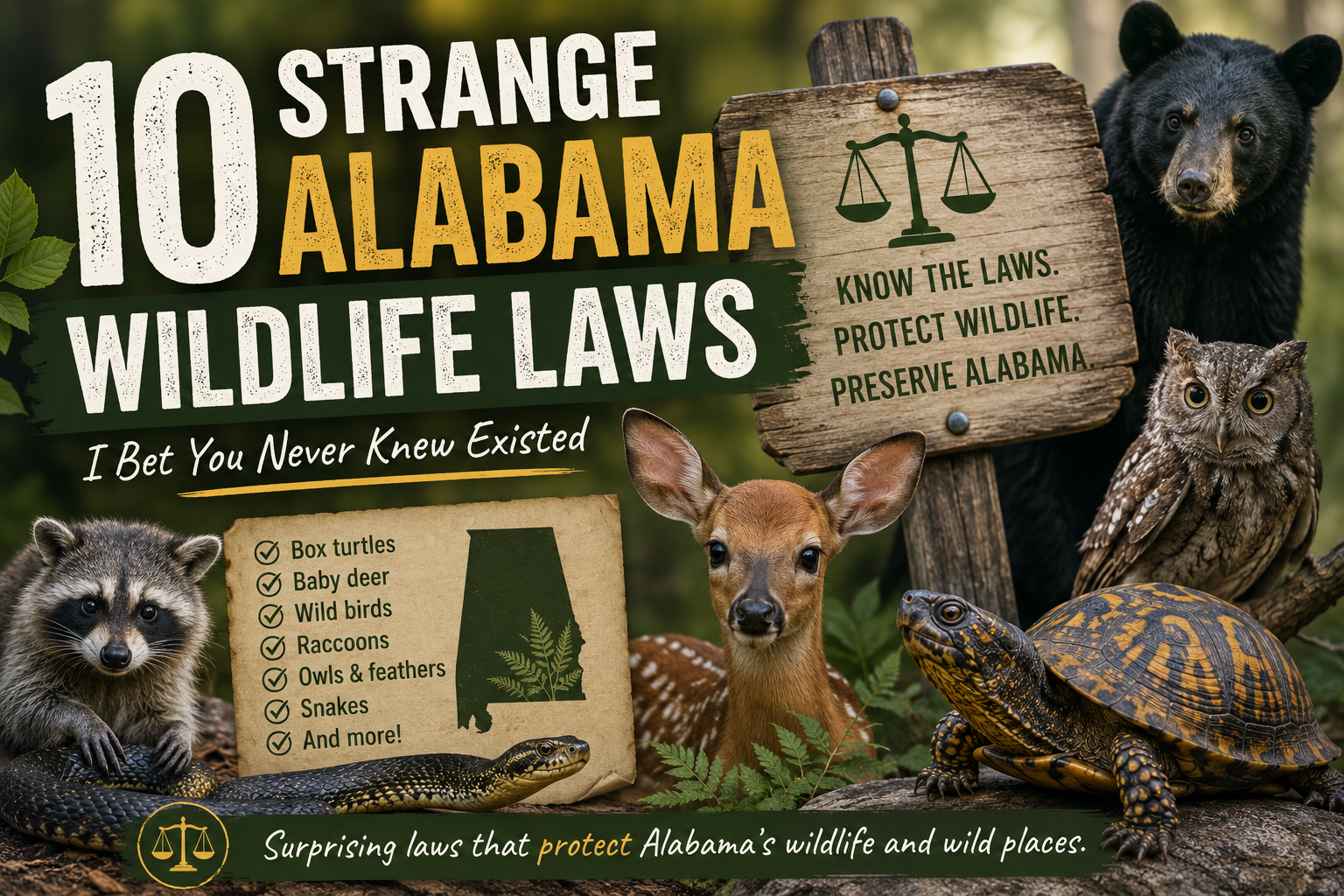
10 Strange Alabama Wildlife Laws I Bet You Never Knew Existed
When most people think about Alabama wildlife laws, they probably imagine hunting seasons or fishing licenses.
But there are actually quite a few surprising rules designed to protect our native wildlife—some of which might catch you completely off guard.
Over the years, I've learned that many things people do with good intentions—like taking home a baby turtle or rescuing a "lost" fawn—can actually be illegal or harmful to the animal.
Here are ten Alabama wildlife laws (and regulations) that I found especially interesting.
🐢 1. You Can't Keep a Box Turtle Just Because You Found It
Box turtles are one of Alabama's most recognizable reptiles, and many people assume they can take one home if they find it crossing a trail.
In reality, Alabama regulations protect native box turtles. There are strict limits on possessing them, and selling or trading them generally isn't allowed without the proper permits.
The best thing you can do if you find one?
Simply leave it where it is—or, if it's crossing a road, carefully move it to the side it was already heading toward.
🦌 2. That "Abandoned" Baby Deer Probably Isn't Abandoned
Every spring, wildlife rehabilitators receive countless phone calls from people who believe they've found an orphaned fawn.
The truth is that mother deer commonly leave their babies hidden for several hours while they feed elsewhere.
Taking the fawn home is not only unnecessary in most cases—it may also violate wildlife regulations.
If the fawn appears healthy and isn't in immediate danger, the best thing to do is simply leave it alone.
🐦 3. You Can't Keep a Baby Bird You Found
Finding a baby bird on the ground can tug at anyone's heartstrings.
However, nearly all native songbirds are protected by both Alabama regulations and federal law.
If a nestling has fallen from its nest, it's perfectly okay to gently place it back if you can safely reach it. Contrary to popular belief, the parents won't reject it because you've touched it.
🦝 4. Wild Raccoons Don't Make Legal Pets
Baby raccoons might look adorable, but Alabama law doesn't allow people to simply adopt one they find in the wild.
Wild animals require specialized diets, veterinary care, and often carry diseases or parasites that make them unsuitable as pets.
Licensed wildlife rehabilitators are the people best equipped to care for orphaned raccoons.
🐻 5. Feeding Bears Is Never a Good Idea
While black bears are still relatively uncommon in many parts of Alabama, their numbers are slowly increasing.
Feeding bears intentionally—or accidentally by leaving pet food or garbage outside—can teach them to associate people with food.
That creates dangerous situations for both bears and humans.
Remember: a fed bear is often a dead bear.
🦇 6. Many Alabama Bats Are Protected
Although bats are often misunderstood, they're incredibly important for controlling insects.
Several bat species in Alabama are protected, making it illegal to capture or possess them without authorization.
One little brown bat can eat thousands of insects in a single night!
🐍 7. Not Every Snake Can Be Collected
Many people are surprised to learn that some snake species receive special legal protection.
Species such as the Eastern Indigo Snake are protected because their populations have declined.
Even harmless snakes play an important role in keeping rodent populations under control.
🐸 8. Frogs Have Rules Too
Even frogs aren't exempt from wildlife regulations.
Certain species have collection limits, while commercial harvesting requires permits.
Those evening frog choruses are protected more than many people realize.
🦉 9. You Can't Keep an Owl Feather You Found
This one surprises almost everyone.
Under the federal Migratory Bird Treaty Act, possessing feathers from most native birds—including owls, hawks, songbirds, and eagles—is generally prohibited without the appropriate permits.
Even if you simply found the feather on the ground, it usually isn't legal to keep.
🌿 10. Sometimes the Best Thing You Can Do Is Nothing
Many wildlife laws have one simple goal:
Leave nature as natural as possible.
Animals often behave in ways that seem unusual to us but are perfectly normal.
Baby birds leave the nest before they can fly well.
Mother rabbits visit their babies only a couple of times each day.
Fawns spend hours lying quietly by themselves.
What appears to be an emergency often isn't one at all.
Sometimes the kindest thing we can do is observe from a distance and allow nature to do what it has done for thousands of years.
Respect Wildlife, Enjoy Wildlife
One of the biggest lessons I've learned while creating Alabama Nature Notes is that wildlife doesn't need us nearly as often as we think it does.
The more time I spend watching birds, reptiles, insects, and mammals, the more I realize they're incredibly good at surviving on their own.
Learning the laws isn't just about avoiding fines—it's about understanding why these protections exist in the first place.
After all, the goal isn't simply to protect individual animals.
It's to protect Alabama's incredible wildlife for generations to come.
Disclaimer
Wildlife laws and regulations can change over time. This article is intended for educational purposes only and should not be considered legal advice. If you're unsure about a specific situation involving wildlife, always consult the Alabama Department of Conservation and Natural Resources or a licensed wildlife rehabilitator.