
I Thought Mama Wren Was Taking Something From a Baby's Mouth… But I Was Completely Wrong!
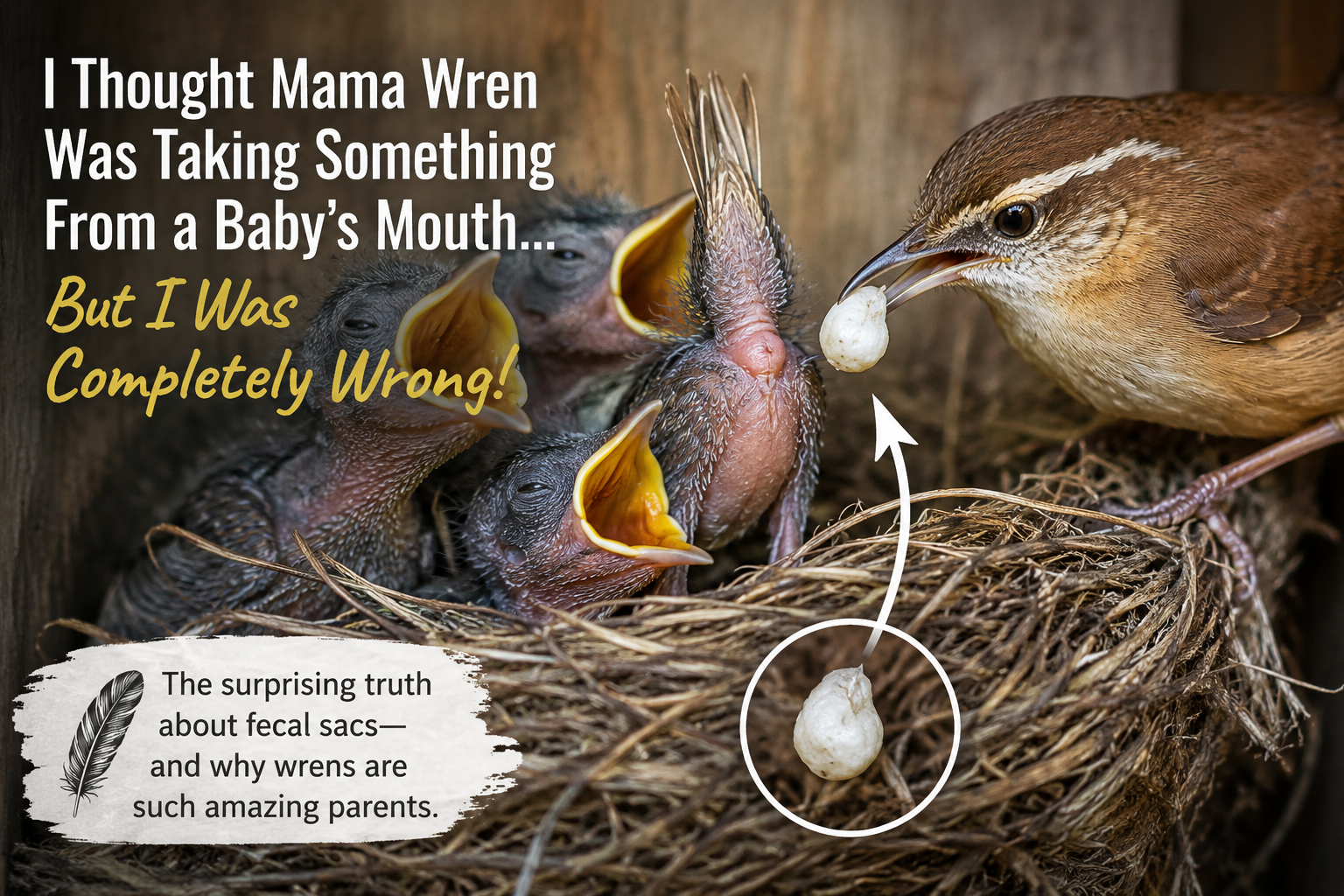
One of the things I love most about having a camera pointed at our Carolina Wren nest is that I notice things I would never see with my own eyes. Every day seems to bring a new surprise, and today was no exception.
While reviewing one of the videos, I watched mama wren arrive at the nest carrying food. She leaned over to feed one of her hungry babies, and then something unexpected happened.
Another chick appeared to "spit out" a small white object, which mama carefully picked up before flying away.
At first, I was completely confused.
Was the baby choking? Was she removing something dangerous from its mouth? Had she accidentally dropped part of the insect she had brought for dinner?
As it turns out... none of those things were happening.
Meet the Fecal Sac
That little white object is called a fecal sac.
Baby songbirds, including Carolina Wrens, don't simply poop into the nest like you might expect. Instead, their droppings are wrapped inside a tough white membrane, creating a neat little package that's easy for the parents to remove.
Even more amazing, this often happens immediately after a feeding.
So the sequence I witnessed was actually something like this:
- Mama arrives with food.
- She feeds one hungry chick.
- Another chick produces a fecal sac.
- Mama immediately picks it up.
- She flies away carrying it to dispose of it somewhere far from the nest.
Nature has some incredible housekeeping habits!
Why Do Wrens Do This?
Keeping the nest clean is incredibly important.
By removing waste, the parents help:
- Keep bacteria and parasites to a minimum.
- Prevent the babies from sitting in their own droppings.
- Reduce odors that could attract predators.
- Keep the nest healthy while the chicks continue growing.
Considering these tiny birds are raising several hungry babies inside such a small nest, it's remarkable how clean they manage to keep everything.
Why Is It White?
The white color comes from uric acid, which is how birds get rid of waste products. Unlike mammals, birds don't produce liquid urine. Instead, the waste is packaged together into that little white sac, making it easy for the parents to carry away.
Another Lesson From the Wrens
One of my favorite parts of this nesting adventure has been discovering behaviors I never knew existed.
From watching eggs hatch, seeing the babies grow day by day, observing both parents work together to feed their family, and now learning about fecal sacs, I've realized just how much goes on inside a tiny nest that most of us never notice.
It's a wonderful reminder that nature is full of incredible details hiding in plain sight.
I'm looking forward to seeing what this little wren family teaches me next!
- Carolina Wren nest
- Baby Carolina Wrens
- Wren chicks
- Backyard birds
- Bird nesting behavior
- Bird parenting
- Fecal sac
- Nest sanitation