
Banded Tussock Moth Caterpillar in Alabama: A Tiny Ball of Yellow Fuzz
Sometimes the most fascinating wildlife isn't the largest animal in the woods—it's the tiny creatures that most people walk right past.
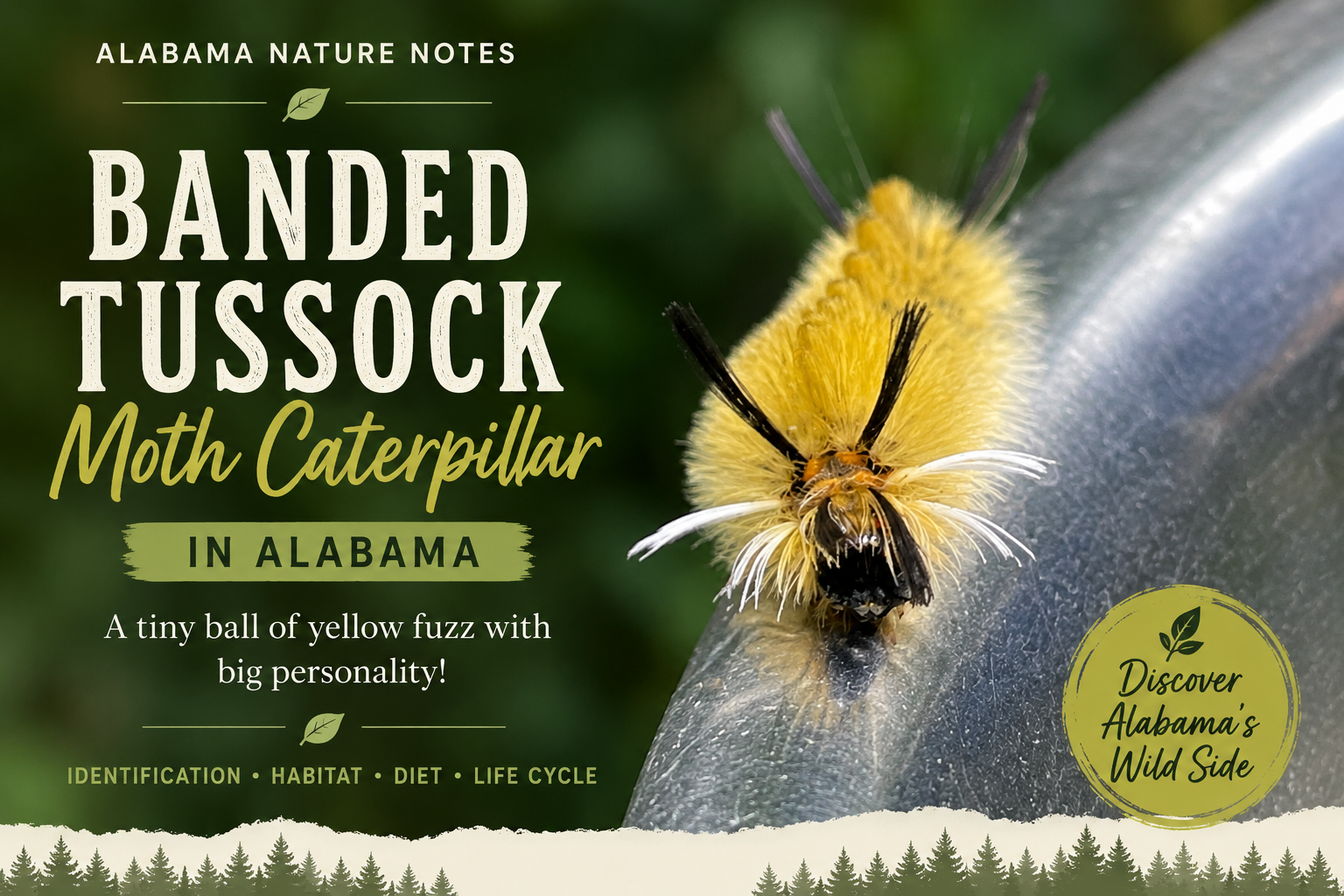
While spending time outdoors here in northeast Alabama, I spotted what looked like a little tuft of bright yellow fur resting quietly on a metal water bowl. As I moved in for a closer look, I realized it was one of Alabama's most eye-catching caterpillars—the Banded Tussock Moth caterpillar (Halysidota tessellaris).
With its fluffy coat and dramatic black tufts, it's easy to see why this little insect catches the attention of photographers and nature lovers alike.
Nature's Tiny Fuzzball
The Banded Tussock Moth caterpillar is covered in soft-looking yellow hairs, giving it the appearance of a tiny pom-pom.
One of its most distinctive features is the pair of long black "hair pencils" that extend upward near the front of its body. Additional black tufts along its back and long white hairs around the sides give it an almost comical appearance, making it one of the easiest fuzzy caterpillars to recognize.
Although it looks soft enough to pick up, it's much better appreciated from a respectful distance.
Please Don't Touch
Like many fuzzy caterpillars, the hairs of the Banded Tussock Moth can cause skin irritation in some people. Most reactions are mild, but sensitivity varies from person to person.
If you happen to find one during a walk or in your own backyard, the best approach is to admire it, snap a few photos, and let it continue on its journey.
What Does It Eat?
These caterpillars aren't picky eaters. They feed on the leaves of many common hardwood trees found throughout Alabama, including:
- Oak
- Maple
- Hickory
- Elm
- Birch
- Ash
- Willow
Because they use such a wide variety of host trees, they can be found in forests, parks, and even suburban neighborhoods.
From Fuzzy Caterpillar to Beautiful Moth
After several weeks of feeding, the caterpillar spins a cocoon where it transforms into the Banded Tussock Moth.
The adult moth looks completely different from its colorful caterpillar stage. Instead of bright yellow fuzz, it wears soft shades of tan, cream, and light brown with delicate wavy markings that help it blend perfectly into tree bark during the day.
It's an amazing transformation—and one of the many reasons insects are so fascinating to observe.
A Reminder to Slow Down
One of my favorite things about nature photography is discovering unexpected wildlife in ordinary places.
This tiny caterpillar may only be a couple of inches long, but its brilliant yellow coloring and unique hairstyle make it one of the most memorable insects I've photographed.
Moments like this remind me that Alabama's natural world is full of incredible surprises. Whether you're exploring a hiking trail or simply stepping outside into your backyard, there's always something interesting waiting to be discovered.Id
Quick Facts
Common Name: Banded Tussock Moth Caterpillar
Scientific Name: Halysidota tessellaris
Family: Erebidae (Tiger Moths)
Found In: Much of the eastern United States, including Alabama
Size: Up to 2 inches (5 cm) long
Diet: Leaves of deciduous trees including oak, maple, elm, hickory, birch, ash, and willow
Defense: Hair-covered body helps discourage predators and may irritate sensitive skin
Adult Form: The Banded Tussock Moth
Best Advice: Enjoy with your eyes and camera—avoid handling fuzzy caterpillars.