
Carolina Wren Nest Journal: Following Birdie's Journey From Nest Building to Incubation

Last Updated: June 21, 2026
Current Nest Status
✅ Nest Active
🐣 Chicks Present: 4
🐤 All Four Eggs Successfully Hatched (June 20, 2026)
🍽️ Both Parents Actively Feeding Nestlings
🪺 Nestling Stage Ongoing
📅 Hatch Date: June 20, 2026
🔗 Continue Reading: Carolina Wren Nest Update: The Eggs Hatch!
Editor's Note (Updated June 21, 2026):
This article documents Birdie's nesting journey through the incubation period and concludes on June 19, 2026, shortly before hatch day.
All four remaining eggs successfully hatched on June 20, 2026.
For hatch day events and ongoing nestling updates, continue to: Carolina Wren Nest Update: The Eggs Hatch!
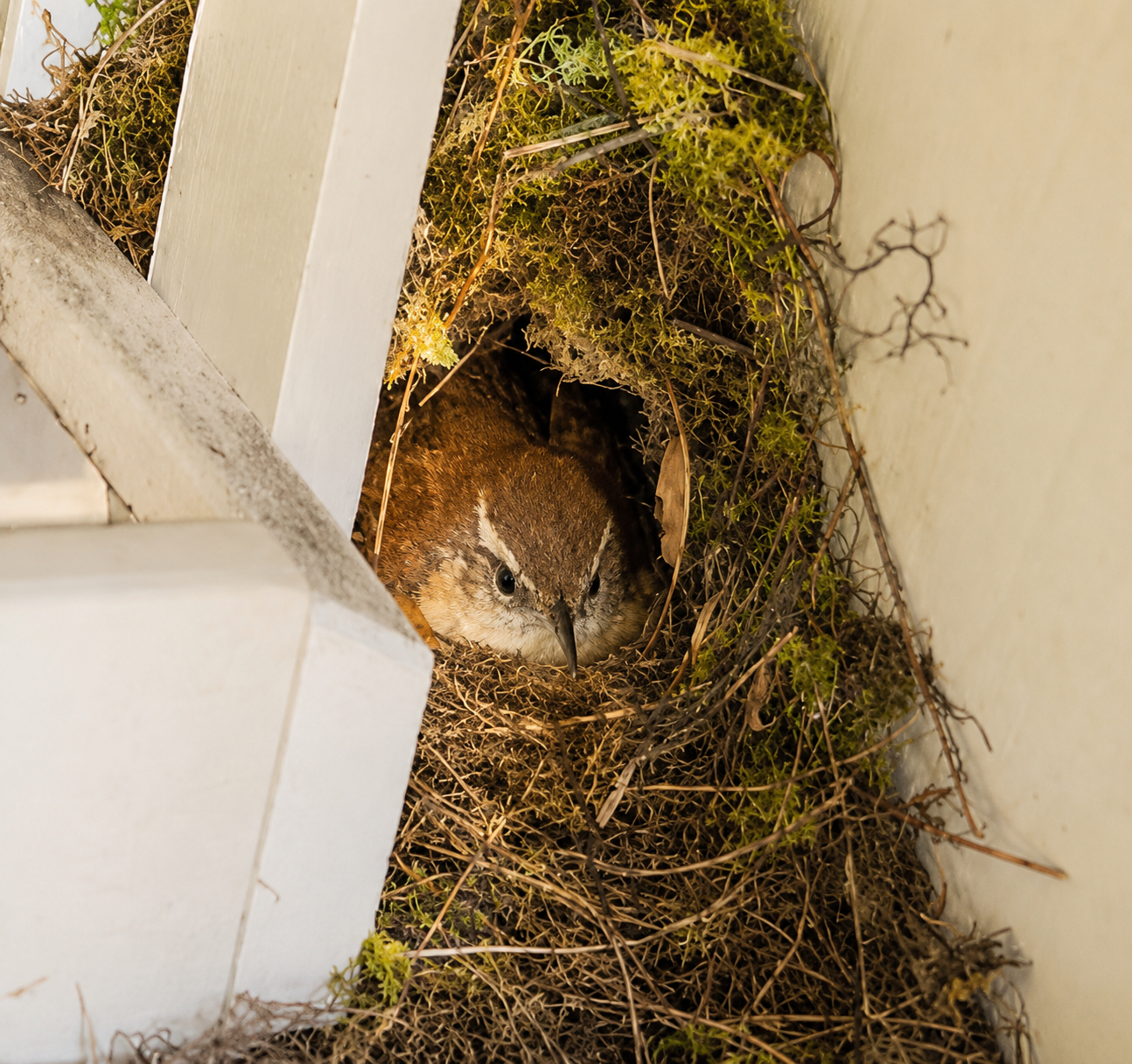
A Third Attempt
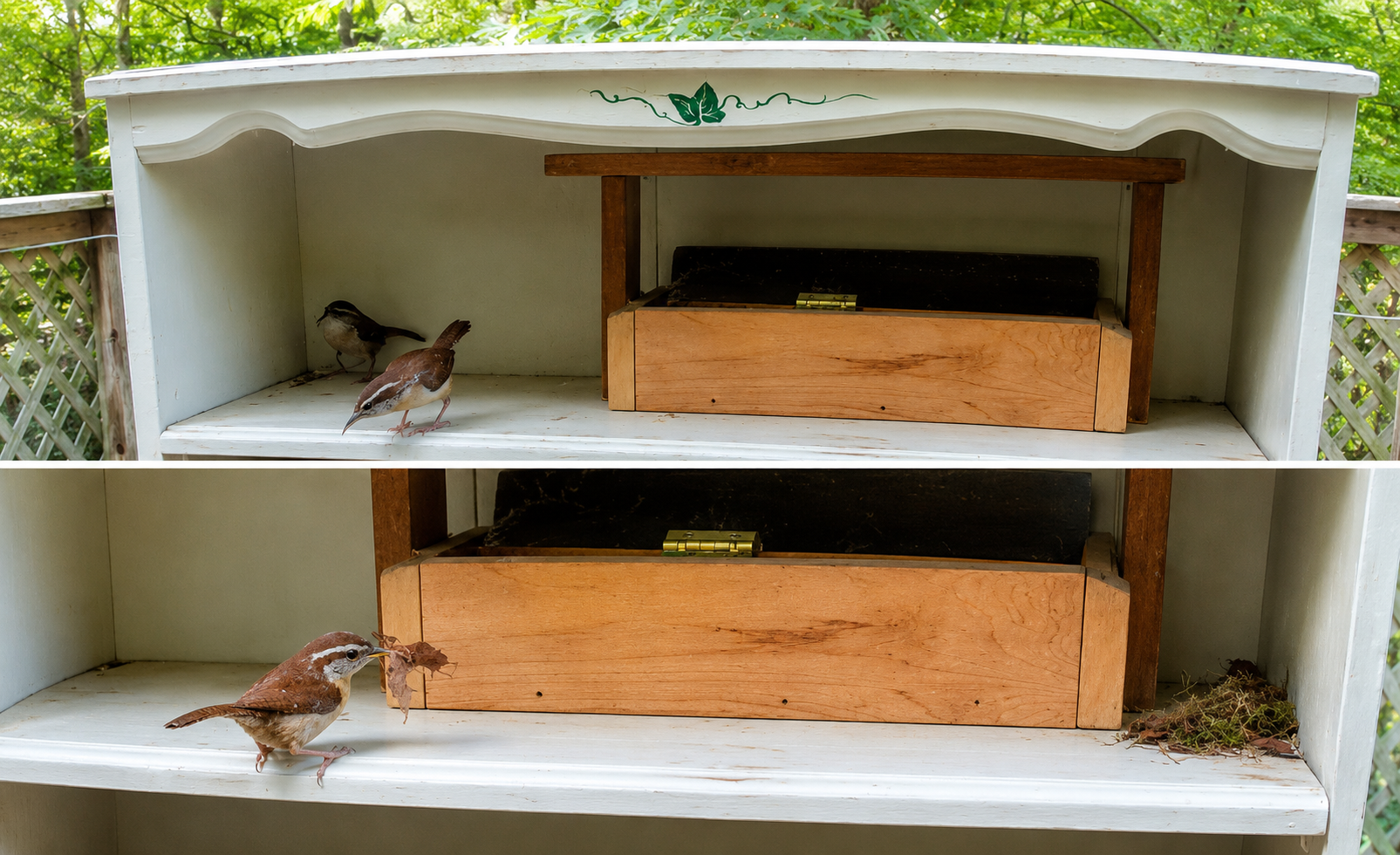
On May 28, our resident Carolina Wrens began building what appears to be their third nest attempt of the season.
The previous two nests had disappeared, and at the time I suspected mice may have been responsible. Fortunately, the wrens were not discouraged and quickly got to work rebuilding.
Over the next several days, both birds worked hard carrying nesting materials and shaping the nest.
By May 29 and May 30, the nest was coming together nicely and appeared to be progressing rapidly.
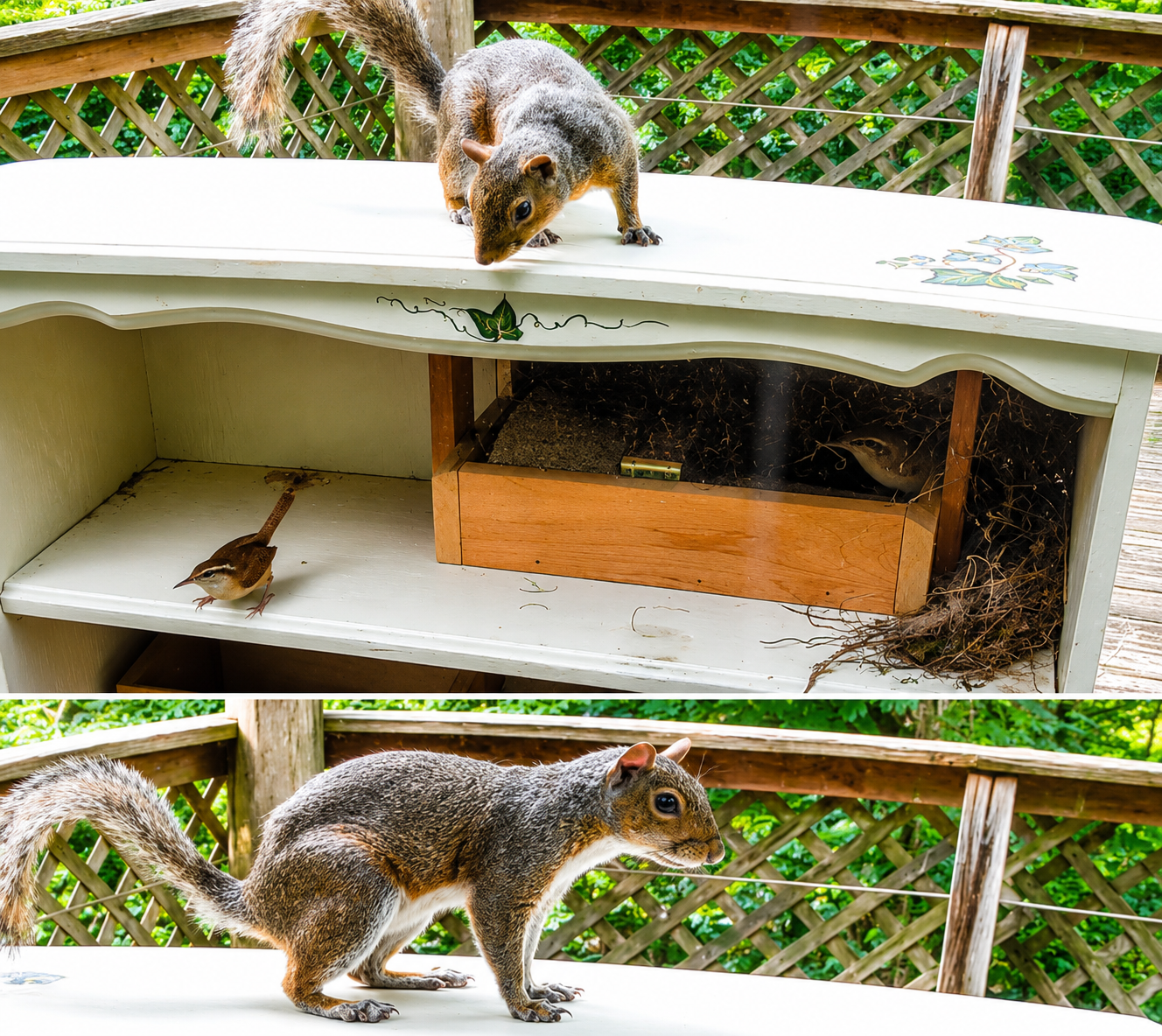
An Unexpected Visitor
On May 30, before any eggs had been laid, an unexpected visitor arrived.
A squirrel appeared and began investigating the nest site. At one point, the squirrel came face-to-face with the wrens while inspecting the area.
Thankfully the squirrel eventually moved on, and the birds continued their work.
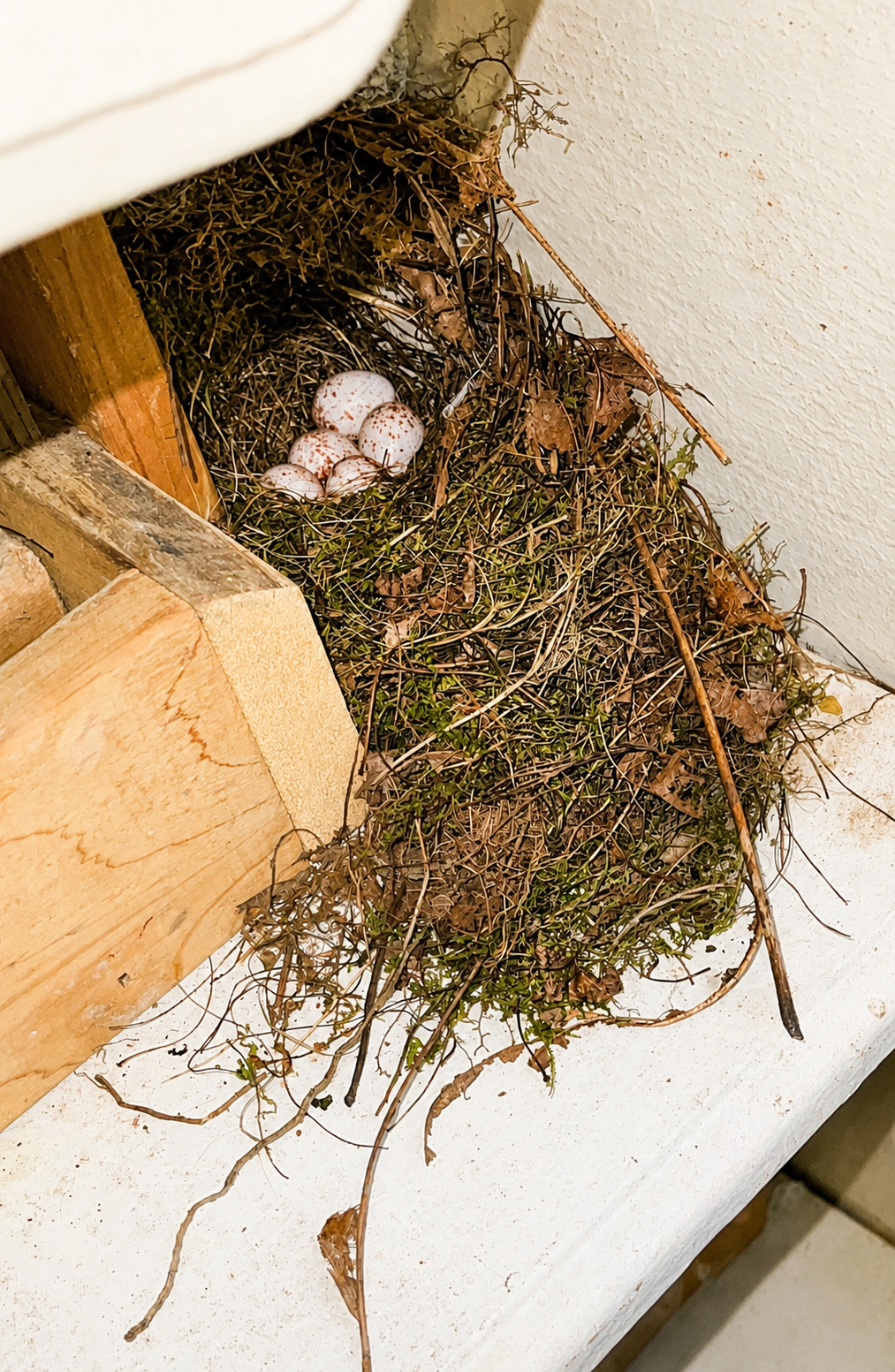
Egg Watch Begins
On June 3, I discovered the first two eggs.
Around this time, Birdie began spending noticeably longer periods sitting in the nest. She still left regularly throughout the day, but her behavior had clearly shifted from nest building to incubation.
The clutch continued to grow:
- June 3 – 2 eggs
- June 5 – 3 eggs
- June 6 – 4 eggs
- June 7 – 5 eggs
By June 7, the nest appeared complete with five eggs.
Incubation Routine
Beginning around June 8, Birdie settled into a fairly predictable incubation routine.
Most mornings begin shortly after sunrise, when she leaves the nest for her first break of the day. Throughout the day she takes several additional trips before returning to continue incubating.
One thing that has become especially noticeable is the involvement of her companion.
The male Carolina Wren frequently visits the nest area, often arriving shortly after Birdie returns from one of her trips away from the nest. In several instances, he appeared to check on both Birdie and the nest itself, surrounding areas around the nest, and brought her food and feeding her occasionally.
June 9 Observation
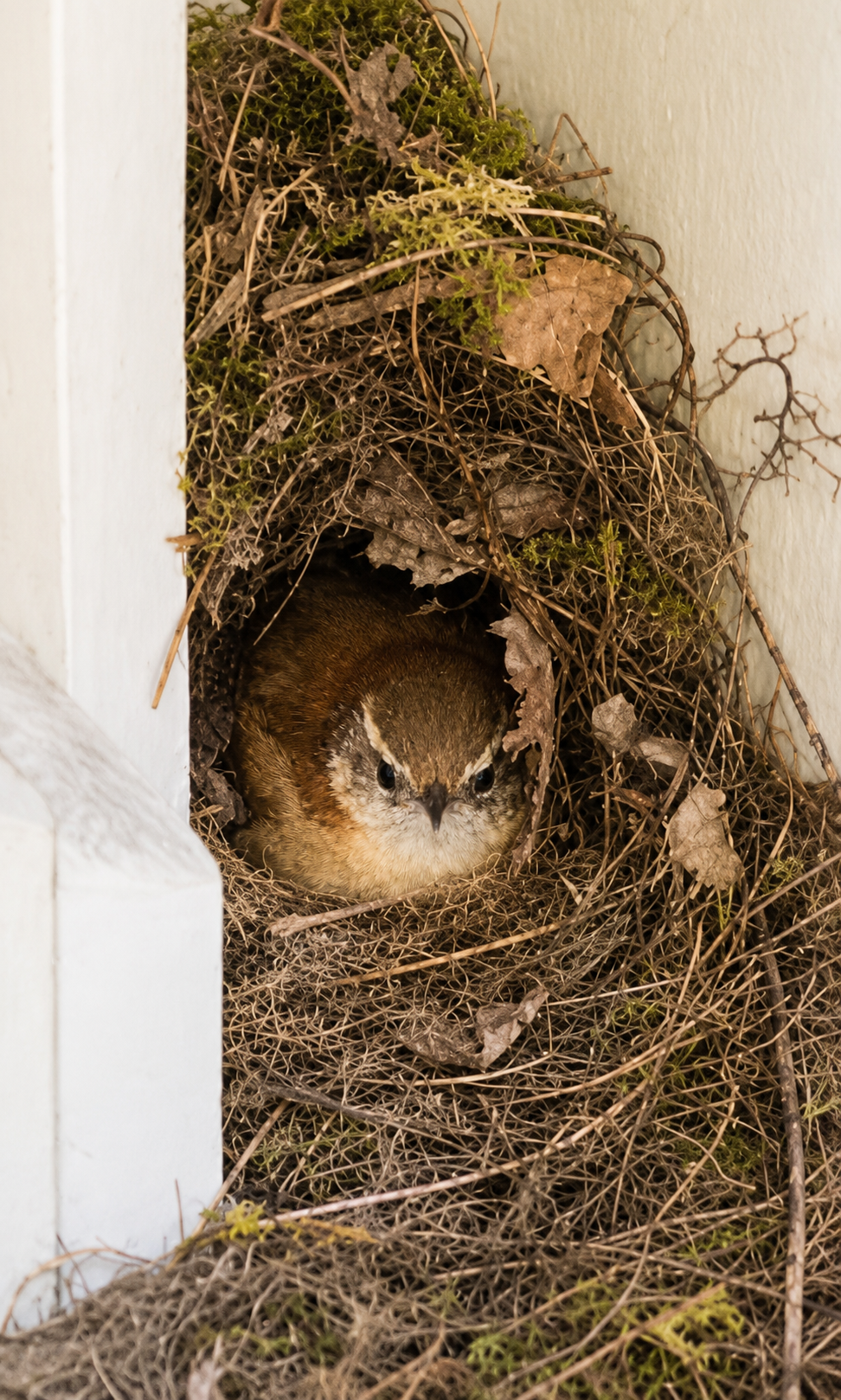
Birdie spent most of the day incubating the eggs.
Despite routine activity nearby, including changing bird water and moving items around the deck, she remained calm and committed to the nest. She doesn't appear to be afraid of us at all, however, we haven't tried to get too close, ensuring she feels safe and not stressed.
Throughout the day she made several trips away from the nest, generally returning within 20 to 90 minutes.
Notable Pattern
Birdie appears to spend the night on the nest and typically begins her first morning trip shortly after 5:30 AM.
June 10 Observation
Incubation continued normally.
Birdie followed a similar schedule, leaving the nest several times throughout the day before returning to continue incubation.
Her companion was observed visiting shortly after several of her returns, suggesting a strong pair bond and ongoing involvement in the nesting process.
One of Birdie's longest absences occurred during the late afternoon before she returned to settle back onto the eggs.
June 11 Observation
Birdie continued her now-familiar routine of incubation punctuated by occasional feeding trips.
The companion was observed visiting shortly after Birdie returned during both the morning and later in the day.
No major changes were observed within the nest itself.
June 12 Observation
Birdie remained highly attentive to the nest.
Several companion visits were recorded throughout the day, and all signs suggested incubation was progressing normally.
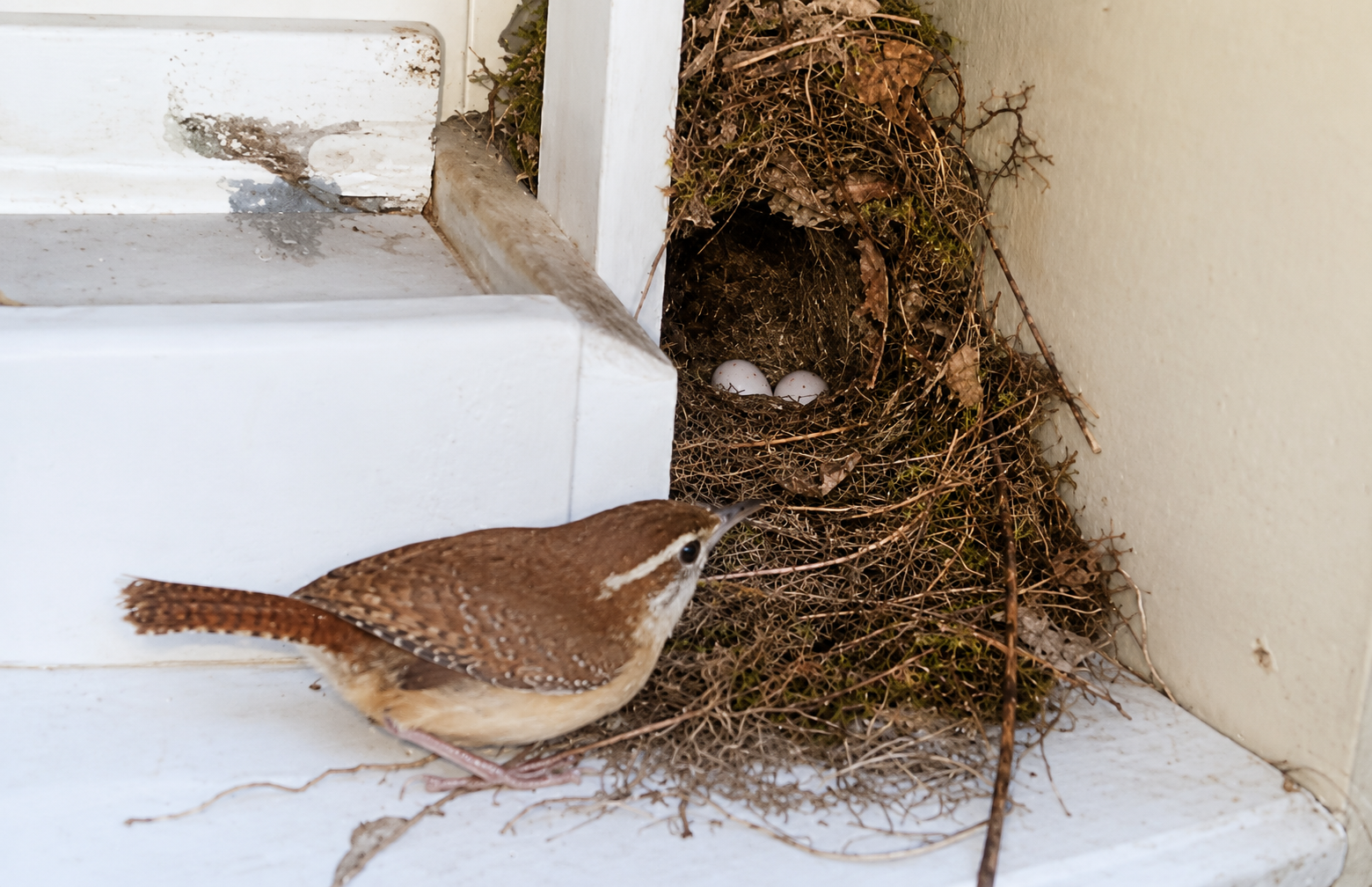
A new concern emerged when our cat began showing increased interest in the nesting area. Because of this, we are being extra vigilant to ensure Birdie can continue nesting safely.
Birdie returned to the nest before nightfall and settled in for the night.
June 13 Observation
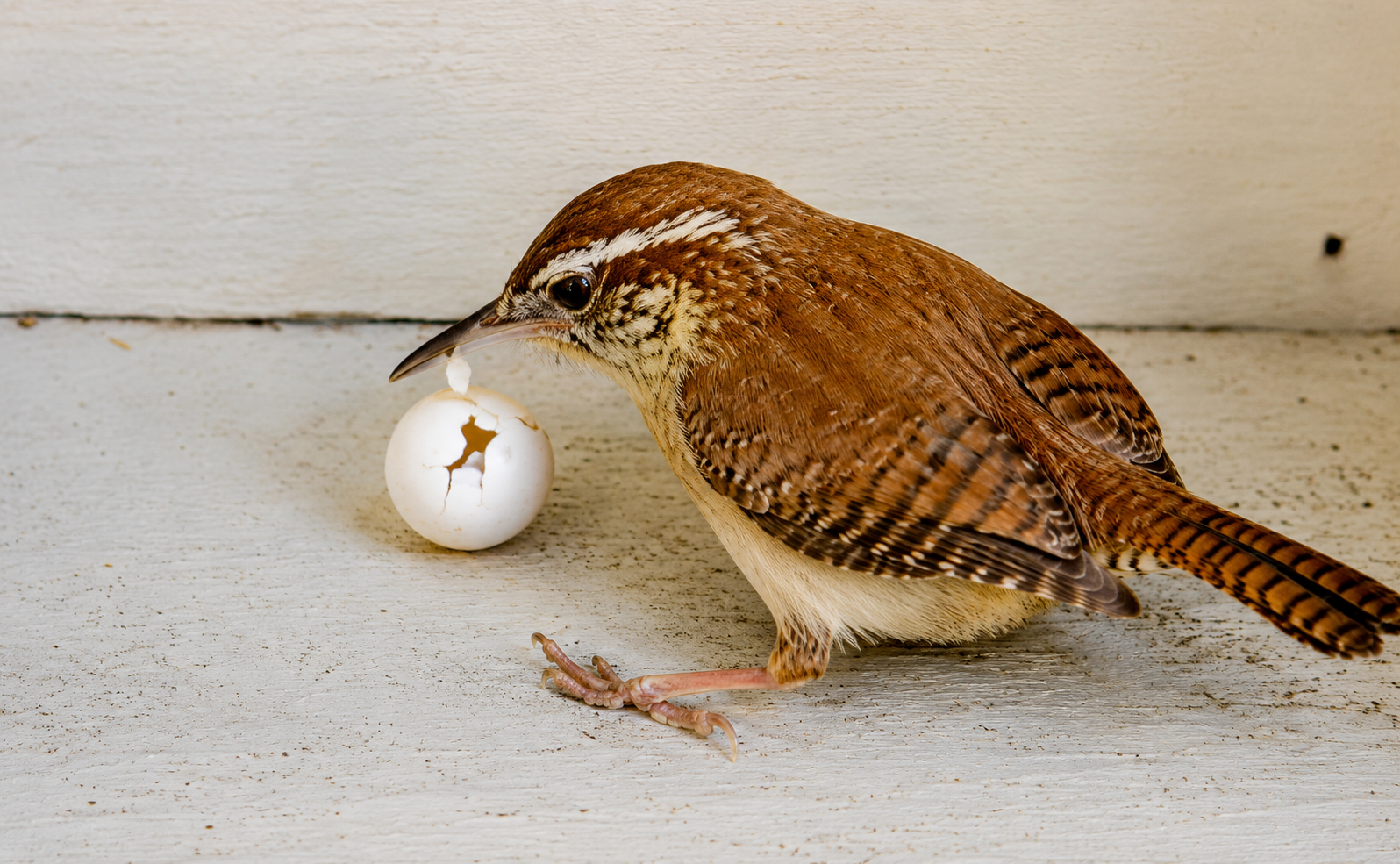
A surprising event occurred today.
At approximately 9:38 AM, Birdie appeared to take one of the eggs, crack it, and consume part of it before flying away with the remains.
At this point I am unsure exactly what happened. It is possible the egg was infertile, damaged, or otherwise problematic.
I will continue monitoring the nest closely over the coming days to determine whether the total egg count has changed.
Our cat didn't seem terribly interested in the nest today, which is a good thing!
The remainder of the day followed Birdie's usual incubation pattern.
June 14 Observation
Birdie continued her routine today.
Her companion was observed visiting multiple times, including one visit where he appeared to feed her while she remained near the nest.
An interesting observation occurred around midday when Birdie returned carrying nesting material despite the nest already appearing complete.
Whether this was maintenance, reinforcement, or simply instinctive behavior remains unclear.
Overall, the nest remains active and Birdie continues to spend the majority of her time incubating.
June 15 Observation
Birdie maintained her incubation routine throughout the day.
Several shorter trips away from the nest were observed during the morning, with Birdie typically returning within 15 to 30 minutes before settling back onto the eggs.
Her companion remained actively involved and was observed bringing food to her on multiple occasions. During at least two visits, he appeared to feed Birdie directly while she remained on the nest.
The frequent feeding visits suggest Birdie is spending as much time as possible incubating while relying on her companion for additional support.
Overall, the nest remained quiet and incubation appeared to be progressing normally.
June 16 Observation
Incubation continued steadily today.
Birdie followed a familiar schedule of brief feeding trips followed by long periods spent on the nest. Several returns were accompanied by her companion lingering nearby and checking the nesting area.
One particularly interesting moment occurred around midday when the companion arrived carrying a small twig. Birdie showed little interest in the offering, so he appeared to add the material to the nest himself before departing.
Later in the afternoon, Birdie was observed rearranging or shuffling the eggs beneath her, a common behavior that helps maintain even incubation conditions.
The pair continue to work well together, with the companion regularly monitoring the area and assisting where possible.
June 17 Observation
Today followed a pattern very similar to previous days.
Birdie spent most of her time incubating, leaving periodically to feed before returning to the nest. Her absences generally remained brief, often lasting less than an hour.
The companion continued making regular appearances throughout the day, often arriving shortly after Birdie returned from a trip away from the nest.
One notable observation occurred during the evening when Birdie returned carrying additional nesting material despite the nest appearing complete.
Whether these additions serve a practical purpose or simply reflect instinctive nest maintenance behavior remains uncertain.
With each passing day, hatch day appears to be drawing closer.
June 18 Observation
Birdie's dedication to the nest remained impressive today.
Early in the morning, all four remaining eggs were clearly visible when she left for one of her routine feeding trips.
Throughout the day, both parents remained highly active. The companion was observed bringing food to Birdie several times, including multiple occasions where he fed her while she remained on the nest.
One unusual event occurred during the early afternoon when Birdie returned to the nest but appeared startled by something nearby, causing her to immediately fly off again before returning a short time later.
Aside from this brief disturbance, incubation continued uninterrupted.
The increasing attentiveness of both parents suggests hatch day may be approaching.
June 19 Observation
Another warm day found Birdie continuing her incubation duties with remarkable consistency.
Several routine departures and returns were recorded throughout the day, with Birdie spending the overwhelming majority of her time sitting on the eggs.
During one afternoon observation, she appeared noticeably warm and somewhat fatigued while resting on the nest. Despite the heat, she remained committed to incubation and showed no signs of abandoning her duties.
No significant changes were observed within the nest itself, but anticipation continues to build as the expected hatch window draws near.
With nearly two weeks of incubation completed, the arrival of chicks now appears imminent.
Patterns Observed So Far
After nearly three weeks of observation, several patterns have emerged:
- Birdie usually begins activity shortly after 5:30 AM.
- She spends most nights on the nest.
- Daily absences generally range from 20 minutes to just over an hour.
- Her companion visits multiple times each day.
- The companion often arrives shortly after Birdie returns.
- Incubation behavior increased noticeably after the fifth egg was laid.
- Birdie appears comfortable with routine activity occurring nearby.
Looking Ahead
The next major milestone will be hatch day.
For now, Birdie remains dedicated to her nest while her companion continues to keep a close watch nearby.
We'll continue documenting their progress and sharing updates as the story unfolds.
See the updated hatch article here.
For a full time line of every event noticed (including time stamps) you can check out this post here.
All images belong to AlabamaNatureNotes.com and may not be used without explicit consent.